
The short answer
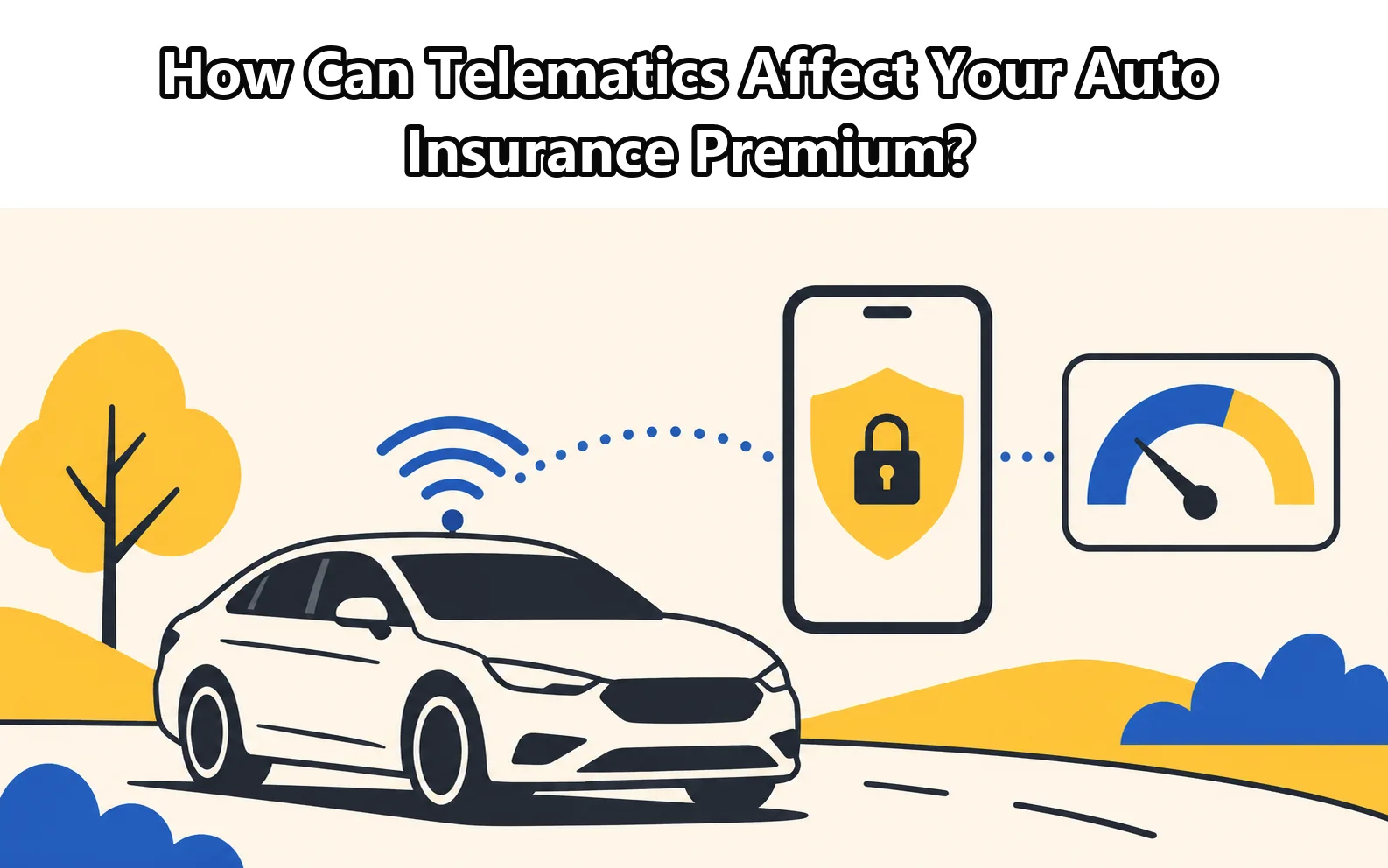
Telematics can affect an auto insurance premium when an insurer uses driving or vehicle information in a usage-based insurance program, a pay-per-mile product, an eligibility process, a discount program, or a policy service. The effect can be a discount, a different price, a program-specific adjustment, or no change, depending on the program rules and the information collected. There is no universal “safe driver score” that works the same way across insurers or states.
Before enrolling, separate four questions: What data is collected? How is it analyzed? Can it change the price or only qualify for a discount? What happens if the device, phone, vehicle system, or data connection fails? The program’s terms, the policy, state rules, and the insurer’s current disclosures control. A social-media claim that telematics always lowers a premium or always raises it is not a reliable pricing explanation.
What telematics means in an insurance context
Telematics generally means information about a vehicle, trip, or driving pattern collected through a device, a mobile application, a connected-car system, or another data channel. Depending on the program, the data may relate to mileage, trip timing, acceleration, braking, cornering, speed patterns, location, vehicle diagnostics, phone interaction, or whether a trip appears to be a passenger trip or a driver trip. The exact data set is program-specific.
The presence of a sensor does not tell you how the insurer uses the information. One program may use mileage for a pay-per-mile calculation. Another may use a driving pattern to calculate a discount. A third may use vehicle or identity data for underwriting, claims, fraud prevention, or service. Read the program description and privacy notice instead of assuming that every connected-car feature has the same purpose.
Discount programs and usage-based pricing are not identical
A telematics program can be structured as a discount opportunity layered onto a conventional policy, or as a usage-based product whose price is built around mileage or driving information. The words “discount,” “reward,” “score,” “usage-based,” and “pay per mile” can describe different contract structures. The base premium, eligibility rules, enrollment period, and renewal treatment matter.
Ask whether the program has a maximum discount, a minimum participation period, a device requirement, a cancellation rule, or a renewal adjustment. Ask whether the introductory estimate is different from the price after the measurement period. Do not compare a headline discount from one program with the full annual price of another unless the coverages, limits, drivers, vehicle, location, and effective dates are comparable.
Which driving signals may matter
A program may describe signals such as hard braking, rapid acceleration, mileage, time of day, trip duration, phone distraction, or speed relative to a posted limit. Some programs may describe location or trip context; others may say that certain data is not used for rating. A signal is not the same as a final rating factor, and a displayed score is not the same as a claim or traffic determination.
Ask how the program treats a short emergency maneuver, a passenger using the phone, a road with poor mapping, a vehicle shared by household members, a borrowed vehicle, a commercial trip, or a device that loses power. If the program cannot explain how common exceptions are handled, the score may be difficult to interpret. The public description is only a starting point; the terms and policy documents govern.
Location, privacy, and data sharing
Vehicle data can raise privacy questions because location and trip information may reveal routines, workplaces, medical visits, religious attendance, or other sensitive patterns even when the program is marketed as a driving tool. The data may pass through an insurer, technology vendor, vehicle manufacturer, mobile platform, or service provider. The parties and purposes should be stated in the applicable notice and terms.
Look for the categories of data collected, the purposes, retention period, deletion or access choices, sharing categories, security language, required permissions, and contact route for privacy questions. Check whether turning off a permission ends participation, changes the price, or simply stops a data stream. Do not assume that “anonymous,” “aggregated,” or “encrypted” answers every question about identifiability or use.
Phone apps and connected vehicles create different risks
A phone-based program may depend on operating-system permissions, background activity, Bluetooth, battery settings, and the phone being with the driver. A vehicle-integrated program may depend on the vehicle model, the manufacturer’s services, connectivity, a dongle, or a service account. The same household can therefore receive different data results from different devices.
Ask which person or vehicle the data attaches to, how trips are separated, what happens when another household member drives, and how to correct a trip classification. Review the app permissions and account security. A program that is convenient to enroll in may still require careful settings if the phone is shared, the vehicle is sold, or the driver changes.
Can telematics raise the premium?
The answer depends on the program’s contract and the rules that apply to the policy. Some programs are advertised as discount-only, while other usage-based structures can use measured information in the price calculation or renewal process. Some programs may describe a neutral outcome, a cap, an adjustment, or a rule that applies only after a defined period.
Do not rely on a phrase such as “it can only help” unless the current written terms actually say that. Ask what happens after a low score, whether the program can be removed at renewal, whether a discount can be lost, and whether the insurer can use data for underwriting or claims separately from the program. Keep the answer tied to the exact state, policy, and version of the terms.
What happens when the data is wrong or incomplete
Data can be missing, duplicated, assigned to the wrong driver, affected by poor GPS, altered by a phone setting, or interrupted by a device problem. A score can also be difficult to reproduce if the program does not show the underlying trip records. Ask how to review, correct, dispute, or exclude a data point and whether there is a deadline.
Save screenshots, trip details, device notices, permission settings, and communications. Ask whether the insurer can recalculate a score or correct a premium after an error. If the program requires continuous participation, ask what happens during a vehicle sale, phone replacement, repair, travel, loss of connectivity, or a period when the vehicle is not driven.
Telematics does not replace ordinary underwriting
A telematics program is usually one part of an insurance relationship, not a complete replacement for every rating or eligibility factor. The insurer may still consider the driver, vehicle, location, coverage limits, claims history, prior insurance, garaging, use, household drivers, credit-related information where permitted, and other factors under the applicable rules.
A good telematics result does not guarantee the lowest premium, and a weak result does not explain every price difference. Compare the whole policy: liability limits, deductibles, collision and comprehensive coverage, uninsured motorist coverage, exclusions, service conditions, payment plan, and renewal terms. A discount applied to an unsuitable policy can still produce a poor comparison.
Questions to ask before enrolling
Ask: Is this discount-only or usage-based pricing? What data is collected? Which data affects price? Is location collected? Who receives it? How long is it retained? Can it be shared with vendors? What happens if I stop participating? Can the price change at renewal? How are household drivers and passengers handled? How do I dispute an error?
Also ask whether the program is available in the vehicle’s state, whether the device or app is required, whether a failed connection has a pricing effect, and how the program treats a replacement phone or vehicle. Request the current terms and privacy notice rather than relying on an older advertisement or a third-party summary.
How to compare a telematics offer fairly
Write down the annual premium before the program, the expected discount or usage formula, the measurement period, the effective date, the coverage limits, deductibles, fees, payment schedule, and renewal language. Compare the same driver, vehicle, garaging address, use, limits, deductibles, and policy term. Keep a separate note for the data and privacy tradeoff.
Model more than one outcome: an ordinary driving pattern, a high-mileage period, a device failure, a household driver using the vehicle, and a renewal after the initial measurement period. The result is an educational comparison, not a quote. Only the insurer or licensed professional can confirm the price and policy terms for the actual application.
What to do if you want to leave
Read the cancellation or withdrawal section before turning off the device or deleting the app. The program may require notice, may end a discount at a stated time, or may move the policy to another pricing treatment. A phone permission change can be treated differently from a formal program withdrawal.
Ask what happens to previously collected data, whether it continues to be used for the policy, whether a final score is calculated, and whether a new declaration page or premium notice will be issued. Keep the confirmation. Do not assume that deleting the app cancels the insurance policy or removes a separate policy obligation.
Why online telematics stories do not predict your price
Public discussions can reveal practical concerns about battery use, trip classification, privacy, discounts, and renewal. They cannot establish the current terms of your insurer, your state’s rating rules, your device, your driver profile, or the data that a program actually received. A result reported by one driver may not transfer to another.
Use an online story as a checklist, then return to the official program terms, privacy notice, declarations page, policy, and current state resources. This site does not calculate a telematics score, recommend enrollment, or promise a discount. The exact program documents and licensed advice control.
A practical enrollment record
Before enrolling, save the program name, version date, insurer, state, current premium, quoted discount or formula, permissions, device identifier, privacy notice, terms, and withdrawal instructions. Note which questions the insurer answered and which remain unknown. Recheck the declaration page after the program takes effect.
This record makes it easier to spot a change in price, a missing discount, a data error, or a new term at renewal. It is not a guarantee that the program will produce a particular result. If a privacy or coverage dispute matters, use the insurer’s formal process and the appropriate regulator or professional.
A practical record checklist
Use the current document about How can telematics and vehicle data affect an auto insurance premium? as the starting point and write the exact question before contacting the responsible provider. Record the policy or plan name, the people involved, the location, the effective date and the date on which the question arose. Separate a confirmed fact from an estimate, a public example and a conclusion that still needs a written answer. Keep notices, declarations, invoices, receipts, photographs, estimates, applications and correspondence in one dated file. When a document is missing, request it through a verified channel and save the request, the response and any reference number. Ask which document controls, which deadline applies, what proof is accepted and who is authorized to change the record. Do not send a general information site Social Security numbers, passwords, payment credentials or unnecessary medical records. If the decision affects a claim, enrollment, renewal, cancellation, contract or legal obligation, obtain advice from the appropriate licensed or official source. Return to the file when a household, vehicle, property, job, health or travel circumstance changes. A short chronology should show what happened, what was reported, what the provider answered and what remains unresolved. Keep copies of every submitted form and do not assume that a phone conversation changed the written policy or plan.
Questions to resolve before acting
Write the missing fact, the responsible contact and the next deadline before choosing a response.
A dated follow-up plan
Keep the notice, the answer, the date and the reference number together so the next step can be checked.
Sources and further reading
- Consumer insurance information — National Association of Insurance Commissioners; checked 2026-10-12.
- Progressive Snapshot usage-based insurance — Progressive; checked 2026-10-12.
- SmartMiles pay-per-mile car insurance — Nationwide; checked 2026-10-12.
- Metromile privacy policy — Metromile / Lemonade; checked 2026-10-12.