
The short answer
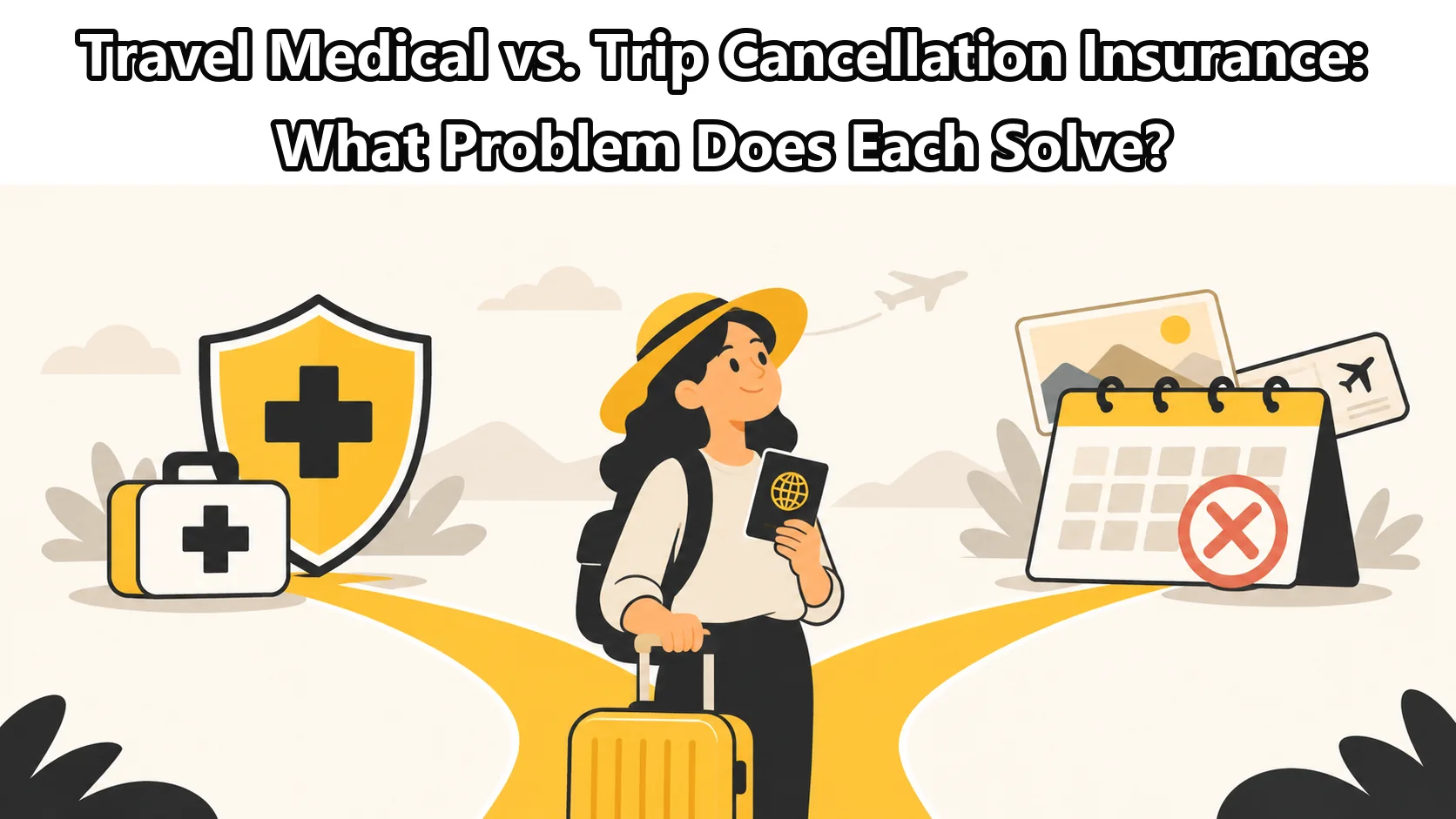
Travel medical coverage and trip cancellation coverage answer different questions. Travel medical coverage is designed around illness or injury during a trip, while trip cancellation or interruption coverage is designed around certain prepaid travel losses when a covered reason prevents or changes the trip. Medical evacuation may be separate, an add-on or part of a broader travel policy. The same traveler can need one benefit, several benefits, or none, depending on existing coverage, destination, trip value and tolerance for paying the risk personally.
Before buying, write the financial risk you want to transfer: an overseas medical bill, transport to an appropriate facility, a prepaid nonrefundable booking, an interrupted itinerary, lost baggage or several of these. Then read the policy’s definitions, limits, exclusions, deductibles, assistance instructions and deadlines. A policy name or checkout badge does not show the full scope. Keep the comparison tied to the actual traveler and itinerary, not a generic package label. Also record what existing employer, credit-card or domestic health benefits already cover so the comparison identifies a real gap instead of paying twice for the same narrow benefit.
Start with the event, not the product name
Ask what could cause the loss. If the concern is becoming sick or injured abroad, look first at travel medical, emergency assistance and evacuation. If the concern is losing prepaid money because a covered event prevents travel, look at cancellation or interruption. If the concern is a delayed bag or missed connection, check baggage and delay sections separately.
One policy can bundle several sections, but bundling does not make each benefit unlimited or interchangeable. A trip cancellation benefit may not pay an overseas hospital. A travel medical benefit may not reimburse a hotel or cruise that was canceled for a reason outside the policy. Map the event to the coverage trigger.
What travel medical coverage is meant to address
Travel medical coverage is generally short-term health or accident protection for illness or injury while traveling. The State Department advises travelers to check whether their regular health insurance covers care abroad and notes that Medicare and Medicaid generally do not pay for medical care outside the United States. The actual travel policy decides covered services, limits, network or assistance process.
Check emergency treatment, hospital care, outpatient care, prescriptions, deductible, coinsurance, prior approval, direct billing, covered countries, trip length and return-home conditions. Ask whether the policy is primary or secondary, whether the traveler must use a preferred facility and what number to call before non-emergency treatment.
Medical evacuation and repatriation are separate questions
Medical evacuation coverage addresses transport to a medical facility or, when the policy allows, transport home. The State Department strongly recommends considering medical evacuation for areas with higher risk or limited medical care. Evacuation can be available separately or as part of travel health insurance, but the trigger, decision-maker, destination and limit are policy-specific.
Ask who decides that evacuation is medically necessary, whether the assistance company must arrange it, whether a companion can travel, and whether transport home is included. Repatriation of remains is a different benefit from living-person evacuation. Do not assume that a standard health policy, credit card or airline service will coordinate the same transport.
What trip cancellation coverage is meant to address
Trip cancellation coverage can reimburse some prepaid, nonrefundable travel expenses when the traveler cancels for a reason the policy covers. The State Department distinguishes this purpose from travel medical coverage, and NAIC consumer guidance lists examples such as serious illness, hospitalization, certain weather or common-carrier disruptions and other defined events.
Read the covered-reason definition and the required proof. A personal preference, fear of travel, work conflict or change of mind may not be a covered reason under a standard policy. The booking terms, supplier refund, credit-card benefit and travel policy may each respond differently, so record who has already refunded or credited the expense.
Trip interruption and delay are not cancellation
Trip interruption addresses a trip that has started or is cut short because of a covered event. Trip delay may reimburse certain additional lodging, meals or transportation after a covered delay and waiting threshold. A policy may use different limits, definitions and proof for each benefit.
Ask when the clock starts, whether a carrier delay qualifies, whether a missed connection is covered, what receipts are required and how unused travel arrangements are valued. Do not assume a canceled flight automatically creates a full trip-interruption payment; the policy trigger and supplier response matter.
Baggage, personal effects and existing home coverage
Baggage or personal-effects coverage can address lost, stolen or damaged items, subject to limits, exclusions, depreciation and a claim process. NAIC notes that homeowners policies may cover personal property while traveling, but the traveler should confirm the actual policy and consider special treatment for expensive items.
Make an inventory of cameras, electronics, jewelry, medication, documents and specialized equipment. Check whether the travel policy is excess or secondary, whether the carrier requires a police report, whether the airline or hotel must be notified, and whether an item’s age, proof of ownership or per-item sublimit changes the payment.
Existing health insurance, Medicare and Medicaid
Do not assume that a domestic health plan follows you abroad. The State Department recommends checking the plan directly and warns that Medicare and Medicaid generally do not cover care outside the United States. Even when a plan provides some emergency benefit, it may not cover evacuation, repatriation, deductibles or foreign billing practices.
Ask your current health insurer what territory, emergency standard, authorization, claim form and reimbursement process apply. Compare that answer with travel medical policy wording. Keep both policy cards and assistance numbers, but do not treat a card as proof that every foreign provider or service is covered.
Pre-existing conditions and medical screening
Travel policies can define pre-existing conditions, stability periods, exclusions, medication changes and required medical information differently. NAIC consumer guidance lists pre-existing conditions among common exclusions, but the actual wording and waiver rules vary. A broad statement that a condition is covered or excluded would be unsafe without the policy.
Read the definition before purchase and ask what date controls the look-back period. Disclose facts as the application requests and keep the answer. Ask whether a waiver requires buying soon after the initial trip deposit, insuring all prepaid costs or meeting other conditions. Do not hide a diagnosis to obtain a cheaper quote.
CFAR is not the same as standard cancellation
Cancel For Any Reason, often called CFAR, can provide broader cancellation flexibility than a standard covered-reason benefit, but it usually has conditions, a purchase window, a cancellation deadline, a requirement to insure eligible trip costs and a partial rather than full reimbursement. NAIC describes CFAR as an add-on that is generally more expensive and typically repays only part of the trip cost.
Read the percentage, deadline, eligibility, residence restrictions and interaction with supplier credits. CFAR does not turn medical coverage into a medical plan and may not cover every fee or every traveler. Ask for the policy’s definition and calculate the maximum benefit before comparing prices.
Destination, activities and trip length
A policy can limit or exclude destinations, travel advisories, war or civil unrest, dangerous activities, alcohol-related events, pregnancy, pandemics, extreme sports or trips beyond a stated length. The State Department checklist advises travelers to confirm countries, trip duration, activities and medical transportation back to the United States.
List the real itinerary and activities: skiing, diving, trekking, motorcycle travel, cruises, remote areas, volunteer work, study, work or visiting family. Ask whether a separate extension, policy or waiver is required. Do not rely on a generic destination label when the route includes multiple countries or a side trip.
When to buy and what timing changes
Travel insurance is intended for sudden and unforeseen events, and timing can affect eligibility. NAIC warns that waiting until a storm is named may mean a policy will not cover claims related to that event. A policy may also offer a limited window for pre-existing-condition waivers or CFAR purchase.
Record the booking date, first deposit, policy purchase date, final payment date, departure, cancellation deadline and supplier refund terms. Ask when coverage begins for each benefit. Buying early is not a guarantee of coverage; the policy still controls known events, exclusions, waiting periods and proof.
Primary, secondary and assistance services
Travel medical benefits can be primary or secondary, and travel packages can include non-insurance assistance such as translation, referrals, itinerary help or lost-luggage coordination. NAIC explains that bundled assistance services are not necessarily insurance. Determine which service is contractual insurance, which is assistance and who can make a medical decision.
Save the 24-hour assistance number and ask whether the company must approve care, arrange evacuation or receive notice within a set time. An assistance service may help locate care without promising that the expense is covered. Keep the policy number and passport or travel details available without sending unnecessary personal data.
Claims documents for medical and trip losses
For a medical claim, keep treatment records, invoices, diagnosis or attending-provider documentation as the policy requests, proof of payment, travel dates, assistance communications and transportation records. For cancellation, keep booking confirmations, supplier cancellation terms, refund or credit records, physician or official event proof and the timeline of the decision.
Notify the insurer or assistance company according to the policy and ask what must happen before a cancellation, hospital transfer or expensive treatment. Do not assume a verbal call completes the claim. Save the claim number, submission date, requested documents and appeal deadline.
US residents, visitors and international readers
A US resident traveling abroad may need to coordinate domestic health insurance, travel medical and evacuation. A visitor to the United States may be asking a different question about visitor medical insurance, network access and eligibility. A student, expatriate or person working abroad may need a longer-duration or specialized plan rather than short-trip travel insurance.
State the traveler’s residence, destination, citizenship or visa context only as the application requires. Do not assume that a product sold to a US resident is available to a nonresident, or that a short-term travel policy is adequate for living or working abroad. Check official program and insurer requirements before purchase.
A neutral comparison worksheet
Make columns for benefit, event trigger, covered traveler, destination, trip length, limit, deductible, primary or secondary status, assistance number, prior authorization, exclusions, pre-existing-condition rule, purchase window, cancellation deadline, documentation and supplier refund coordination.
Use the worksheet to expose gaps rather than rank policies by premium. A low price may omit medical evacuation, have a high deductible, exclude an activity or reimburse only a portion of a prepaid loss. Ask the insurer to explain a difference in writing.
Final travel insurance checklist
Before buying, confirm: what medical care is covered; whether Medicare, Medicaid or your health plan pays abroad; evacuation and repatriation; cancellation, interruption and delay triggers; baggage limits; pre-existing-condition wording; CFAR conditions; destination and activity exclusions; trip length; purchase timing; assistance requirements; claim documents; and whether supplier refunds come first.
Then save the policy, certificate, receipt, booking records, assistance numbers, itinerary, medical information and claim instructions. Note which benefit is intended to pay first, which provider must be contacted, and which expenses remain your responsibility while a claim is reviewed. Insurance Radar explains the comparison questions; the current policy, official travel guidance, health plan and licensed professionals decide the actual protection. Recheck the file if the destination, dates, travelers, medical facts or prepaid trip cost changes after purchase, and ask the insurer about the change promptly.
Sources and further reading
- Consumer insurance information — National Association of Insurance Commissioners; checked 2026-10-12.