
The short answer
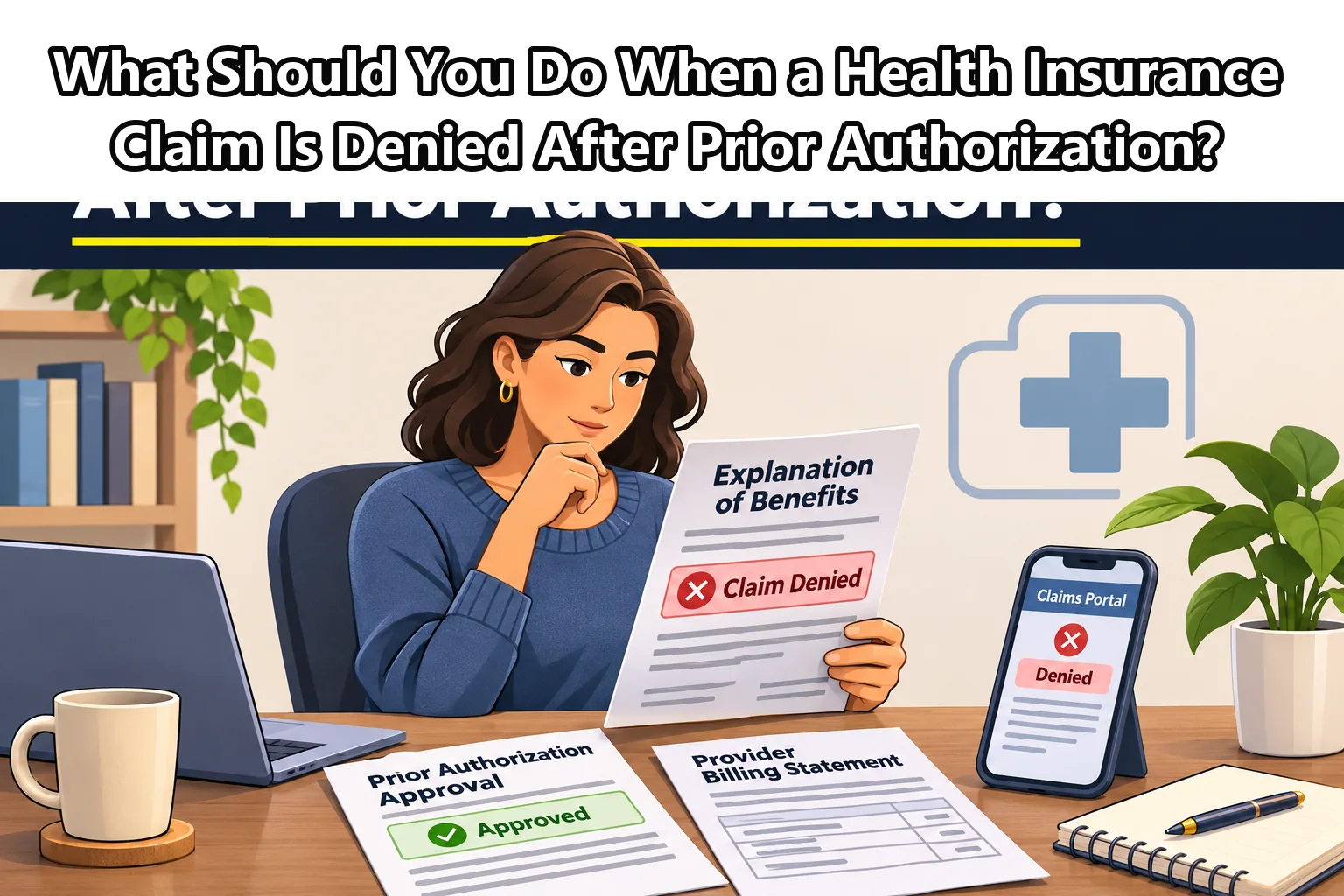
A prior authorization is not always a promise that every later claim line will be paid. The authorization may apply to a named service, provider, facility, date range, quantity, code, or clinical indication, while the later claim is processed under eligibility, network, coding, benefit, deductible, exclusion, and plan-administration rules. Start with the Explanation of Benefits (EOB), the denial notice, the authorization approval, and the provider bill together.
Ask the health plan and the provider to identify the exact line that was denied, the denial code, the policy or plan provision used, and whether the dispute is administrative, coding-related, medical-necessity-related, or a disagreement about what was authorized. Do not assume that an approval, a provider statement, or a bill by itself proves the final coverage result. The first objective is to define the disputed line and preserve the applicable deadline, not to argue every possible issue at once. A clear record also reduces duplicate submissions and contradictory explanations.
Read the EOB before paying the bill
An EOB is generally the plan’s processing statement, not an invoice. Compare the billed amount, allowed amount, plan payment, member responsibility, adjustment, deductible, coinsurance, copayment, and denial reason. The provider’s bill may not use the same labels or may contain charges that the plan did not process on the same claim.
Check the patient name, member ID, dates of service, provider, place of service, procedure or revenue lines, diagnosis codes when shown, and claim number. If the EOB is missing a line or appears to describe a different service, contact member services and the provider billing office before treating the balance as final.
Separate prior authorization from claim payment
Authorization usually addresses whether a plan has approved a requested service in advance under the information available at that time. Claim adjudication can still examine whether coverage was active on the service date, whether the provider and facility were eligible or in network, whether the billed code matches the authorized service, whether the quantity and dates match, and whether another plan or benefit rule applies.
The approval letter may contain an authorization number, approved codes, provider or facility names, dates, units, and conditions. Compare each of those fields with the claim. If the claim used a different code or the service changed, ask whether the provider must correct or resubmit the claim or whether the plan needs a new review.
Confirm the exact denial code and line item
A short phrase such as “not covered,” “authorization missing,” “medical necessity,” “out of network,” or “invalid code” can hide different next steps. Request the full explanation in the EOB or adverse-benefit-determination notice and ask the plan to explain the denial in plain language without relying only on a call-center shorthand.
Record the date of every call, the representative’s name or reference number, the department, and the promised next step. Ask whether the decision is a claim adjustment, a formal adverse benefit determination, a provider payment dispute, or a member appeal issue. This classification helps keep the correct deadline and submitter attached to the case.
Compare the authorization record with the billed service
Make a side-by-side list of the authorization number, approved service, code or code family, provider, facility, dates, units, and clinical setting. Then compare it with the claim form, operative or treatment record, itemized bill, and EOB. A mismatch can arise from a changed appointment, a substitute provider, a different facility, additional units, or a code selected during billing.
Ask the provider’s authorization team to explain any mismatch and request a corrected claim when the provider’s record is wrong. Ask the plan whether the original authorization can be linked to the corrected claim. Keep copies rather than sending the only original approval or clinical document.
Ask provider billing to correct or resubmit
Some disputes are provider-side billing or coding errors rather than a member coverage appeal. The provider may need to correct a member ID, diagnosis, modifier, place of service, National Provider Identifier, authorization number, units, or coordination-of-benefits field. Ask for the claim control number and the date of any corrected submission.
A corrected claim does not guarantee payment, and a provider reconsideration route may be different from a member appeal. Ask the provider to say in writing whether it is correcting, resubmitting, or appealing the claim, and ask the plan whether you also need to file a member appeal to protect your rights.
Gather clinical and administrative documents
Build a focused packet: EOB, denial notice, authorization letter or portal record, referral, order, itemized bill, claim forms when available, medical records relevant to the service, provider notes, test results, and correspondence. Include only what is needed for the issue and keep a private copy of every submission.
Add a one-page timeline with the request date, authorization decision, service date, claim date, denial date, calls, corrected claims, and appeal deadlines. Label each document with what it is meant to show. The aim is to make the disputed fact visible, not to send a large unorganized medical file.
Check network, eligibility, and plan dates
An authorization record may not resolve every eligibility and network question. Confirm the plan name, member status, effective date, termination date if any, employer or marketplace enrollment, provider and facility network status for the service date, and whether the claim was routed to the correct plan. An eligibility or network change can produce a denial even when an earlier request was approved.
Ask the plan to identify whether the authorization was issued under the same member, product, network, provider, facility, and plan year shown on the claim. If coverage changed, preserve both plan cards and notices. Do not infer from a current directory or current member portal view what was true on the older date of service.
Review medical-necessity or coding language
When the denial refers to medical necessity, clinical criteria, experimental or investigational treatment, or coding, ask for the criteria and the clinical information the reviewer considered. The fact that authorization was granted can be important evidence, but the plan’s documents may still distinguish an authorization decision from later claim processing or a changed clinical record.
Ask the provider whether it can submit a supporting letter, corrected records, peer-to-peer request, or coding explanation. Avoid changing medical records or asking a clinician to state a conclusion that is not supported by the chart. This site cannot assess treatment necessity or advise on medical decisions.
File the internal appeal
Use the appeal instructions on the EOB, denial notice, plan document, or member portal. A useful appeal identifies the claim and authorization, states the specific line and reason disputed, explains the timeline, attaches the strongest documents, and asks for a written reconsideration of the exact action. Keep the appeal focused on the plan’s stated reason rather than repeating the entire medical history.
Deadlines differ by plan type, governing rules, and notice. Some public carrier instructions describe a period such as 180 calendar days, but that is not a universal deadline. Follow the notice and plan document, submit through the stated channel, and save confirmation, upload receipts, fax reports, postal tracking, and the complete packet.
Ask for an expedited review only when appropriate
Some plans provide an expedited or urgent review path when waiting for the standard process could seriously jeopardize a person’s life, health, or ability to regain maximum function, subject to the plan and applicable rules. The plan’s instructions should say how to request it and what information is needed.
Do not label a routine billing correction urgent merely to shorten a queue. Ask the treating clinician or plan which route applies, provide the factual reason for urgency, and record the submission time. An expedited route can have different response expectations and may require a clinician’s involvement.
Understand external review and plan type
After an internal appeal, some members may have an external-review or independent-review route, especially for certain medical-necessity or coverage determinations. Eligibility depends on the plan, denial type, state or federal oversight, timing, and the notice. Employer plans, individual marketplace plans, government programs, and limited-benefit products can use different processes.
Read the adverse-benefit-determination notice for the next-step instructions and deadline. Ask the plan whether the denial is eligible for external review and which entity receives the request. A state insurance department or program administrator can explain the public process, but it does not replace the plan documents or individualized professional advice.
Keep provider and member appeals separate
A provider may dispute reimbursement, coding, contract payment, or claim processing through a provider reconsideration route. A member may dispute financial responsibility or an adverse benefit determination through a member appeal. The two tracks can overlap but they are not automatically interchangeable.
Ask both sides what action they have taken and what remains your responsibility. Request that the provider pause collection activity while the claim is being corrected or appealed when its policy allows, but do not assume that a pause, a phone promise, or a provider submission extends a plan appeal deadline.
Track bills, deadlines, and collection contacts
Keep a claim log with the claim number, authorization number, service date, denial date, appeal deadline, submission date, contact person, reference number, and next follow-up date. Match every bill to an EOB and mark which lines are disputed. Store the log separately from medical records if other people help with paperwork.
If a bill is sent to collections or a payment deadline is approaching, ask the provider’s billing office for its written dispute or financial-assistance process and explain that the insurance review is pending. Do not ignore notices. The site cannot determine whether a debt is valid or advise on a collection dispute.
Protect sensitive medical information
Medical records, member identifiers, diagnoses, treatment details, and bills are sensitive. Send documents only through the plan’s official portal, secure upload, fax, mail, or contact method listed in the notice. Remove unrelated information where the plan allows and keep a record of what was submitted.
Do not paste a full medical record, member ID, birth date, or claim document into a public forum or an unverified form. If a third party helps, confirm its role and the authorization needed to discuss the claim. This site does not collect or process health information.
What not to infer from a denial
A denial after authorization does not by itself prove that the authorization was worthless, that the treatment was medically inappropriate, that the provider acted improperly, or that the member must pay the billed amount. It may reflect a code mismatch, missing record, eligibility issue, network rule, benefit exclusion, deductible, claim routing problem, or a disagreement that still needs review.
Likewise, a prior approval does not by itself prove final payment, and an EOB balance does not automatically equal a collectible balance. Use the plan’s notices, the provider’s corrected records, and the appeal process to resolve the actual line at issue.
Final checklist
Before acting, collect the EOB, denial notice, authorization record, provider bill, claim and authorization numbers, dates, denial code, plan document, network and eligibility details, and appeal deadline. Compare the approved service with the billed line, ask the provider to correct errors, and ask the plan for its full written explanation.
Then use the member appeal, expedited-review, external-review, provider-reconsideration, regulator, or professional-help route that the documents actually identify. Preserve confirmation and copies, protect medical privacy, and keep unresolved balances separate from unsupported assumptions. Insurance Radar explains how to organize the review; it does not decide coverage or provide medical or legal advice.
Sources and further reading
- Health Claims and Explanation of Benefits — Cigna Healthcare; checked 2026-10-13.
- Health Care Appeals and Grievances — Cigna Healthcare; checked 2026-10-13.
- Claim Denial Resources for Members — Aetna; checked 2026-10-13.
- Ambetter Health Member and Provider Appeals Processes — Ambetter Health; checked 2026-10-13.
- Sidecar Health Appeals Packet and Adverse Benefit Determination Supplement — Sidecar Health; checked 2026-10-13.
- Grievances, Appeals and Exceptions — Humana; checked 2026-10-13.